
February Birthstone: Amethyst
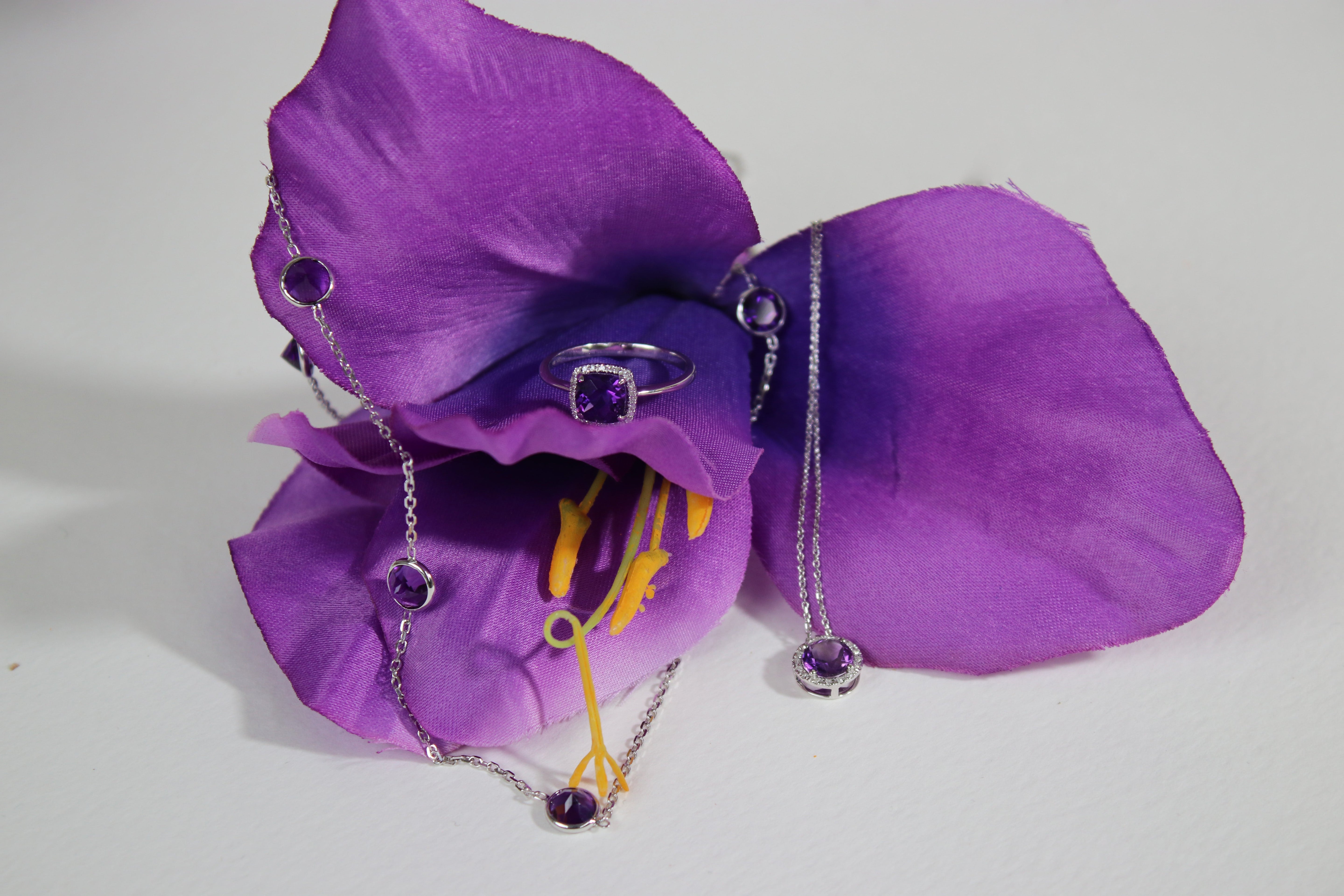
If you were born in February, you likely know amethyst is your birthstone. This beautiful purple gemstone can range from a cool bluish-purple to a reddish-purple, and it has captivated humanity for thousands of years.
At R.F. Moeller Jeweler, we often see clients drawn to its rich color, but many are surprised to learn about its fascinating lore. From angry Greek gods to medieval royalty, this gem has a history as colorful as its appearance, and it is commonly found in the collections of royal families throughout Europe and Asia.
Is this gemstone a smart purchase for your jewelry collection? Today, we are exploring the myth, the meaning, and the practical wearability of the February birthstone.

Amethyst Meaning: Where Does the Name Come From?
The name comes from the Ancient Greek word “amethustos,” meaning “not intoxicated.” That’s because ancient wearers thought wearing amethyst could fend off drunkenness! Due to the wine-like color and the legend, Greek mythology associated this gemstone with Dionysus, the god of wine.
For many years, it was believed that having an amethyst in your mouth or on your person could allow you to drink all night and remain sober.
The Legend of Dionysus and Amythyste
There are many versions of this legend, but this is the one that fascinates us most:
The story goes that Dionysus, the god of wine (known as Bacchus in Roman mythology), was in a foul mood one day and vowed to unleash his tigers on the next mortal he saw. That unfortunate mortal was a beautiful maiden named Amethyste, who was on her way to worship the goddess Artemis.
To save her from the tigers, Artemis (Diana in Roman mythology) transformed the maiden into a statue of pure, clear quartz. Overcome with remorse, Dionysus poured his wine over the statue, staining the quartz a deep, magnificent purple.
Amethyst History: A Colorful Tapestry
Amethyst's history has been associated with countless myths, legends, and cultures. Here are a few of our favorites:
-
In ancient Egypt, they were carved into the shapes of animals and used as protective amulets.
-
It is said that Saint Valentine wore an amethyst ring carved with the image of Cupid.
-
During the Middle Ages, English regalia was decorated with amethysts to symbolize royalty.
-
Leonardo da Vinci was thought to have said that amethyst enhances intelligence and dispels evil thoughts.
-
Catherine the Great, the empress of Russia from 1729 to 1796, adorned herself in amethyst necklaces, earrings, and other jewelry.
Why such a deep connection to royalty? Long before it was accessible to the public, purple was the color of kings and queens. Creating purple dye was historically an arduous and expensive process, making it exclusive to the ultra-wealthy. Because amethyst naturally occurs in this coveted hue, it became a symbol of power, held in the same regard as diamonds. It wasn’t until the discovery of abundant sources that it became an easier accessible gemstone for non-royals.
Where Are Amethysts Found?
This February birthstone is often found in geodes or in the cavities of granitic rocks. The most abundant and important sources are in Africa and South America, although they can be found in the United States and Canada. Zambia’s Kariba mine is one of the world's largest sources.
The Big Question: Should You Buy Amethyst?
Jewelry should be beautiful, high-quality, and inspiring. Does this gemstone fit the bill? Yes, with a few tips. Here’s what to know before adding a piece to your collection:
-
The "Wow" Factor for the Price. Unlike rubies or emeralds, which become more expensive as they get larger, high-quality amethyst can be found in large carat weights at a relatively accessible price point. If you want a statement cocktail ring or a pendant that truly pops, you can go big without compromising quality.
-
Durability and Daily Wear. On the Mohs Scale of Mineral Hardness, amethyst scores a 7 out of 10. It’s softer than Diamonds (10), Sapphires (9), and Rubies (9). Our advice? It’s perfect for earrings and necklaces, which don't endure much impact. For rings, it is an excellent choice for special occasions. If you plan to wear an amethyst ring every single day (like an engagement ring), you will want to treat it with a bit of extra care to avoid scratching it over time.
Find Your Royal Hue
Whether you’re celebrating a February birthday, a 6th wedding anniversary (the traditional gift!), or simply want to feel like royalty, we have a selection that will spark joy.
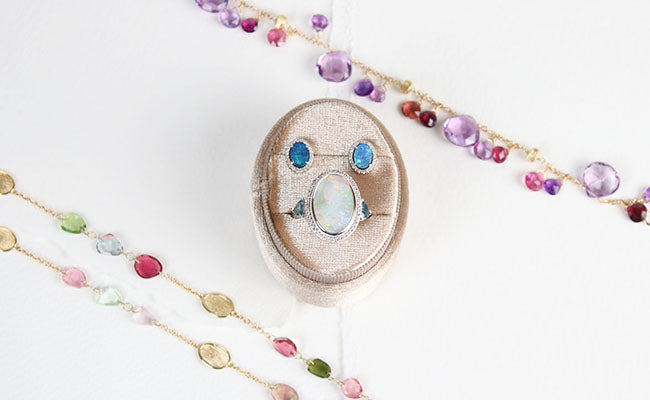
Check through our amethyst collection. Then go ahead and schedule an appointment or stop by one of our Twin Cities showrooms in Edina or Saint Paul. We would love to help you find a piece that speaks to you and celebrates your unique story.