

4 Things You Should Never Use To Clean Jewelry
Search Google for “how to clean jewelry”, and you’ll get countless answers. Unfortunately, much of that advice can do more harm than good. At R.F. Moeller Jeweler, we see the damage caused by improper cleaning far too often. Instead of covering every bad tip out there, we’re focusing on the four most common mistakes we recommend avoiding.
Never use these 4 things to clean your jewelry.
Baking Soda
Baking soda is often praised as a natural cleaner, but its texture is mildly abrasive. That abrasiveness can leave micro-scratches on gold, platinum, and softer gemstones, slowly dulling their shine. While those scratches may not be immediately visible, they build up over time and are difficult to reverse without professional polishing.
Toothpaste
Toothpaste is frequently suggested as a quick fix, but it’s formulated to scrub enamel—not fine jewelry. Most toothpastes contain abrasives (often baking soda or silica), and whitening formulas include chemical agents that can discolor or damage metals and gemstones. Even occasional use can leave jewelry looking cloudy or worn.
Boiling Water
High heat is one of the fastest ways to compromise a piece of jewelry. Boiling water can cause metals to expand and contract, which may loosen stones in their settings. Some gemstones are especially sensitive to heat and can develop fractures or internal damage that isn’t always visible right away. What seems like a simple cleaning method can turn into an unexpected repair.
Alcohol
Alcohol-based cleaners, including rubbing alcohol, can be harsh on certain gemstones. Stones like opals and emeralds contain natural oils or moisture that help maintain their stability. Alcohol can dry them out, increasing the risk of cracking or surface damage over time. When in doubt, it’s best to avoid alcohol altogether.
How to Clean Your Jewelry at Home
So what should you do when your jewelry needs a little refresh at home? We keep it simple. This video from Jewelers Mutual gets it exactly right and walks through a safe, effective method you can trust.
The Safest Way to Care for Your Jewelry
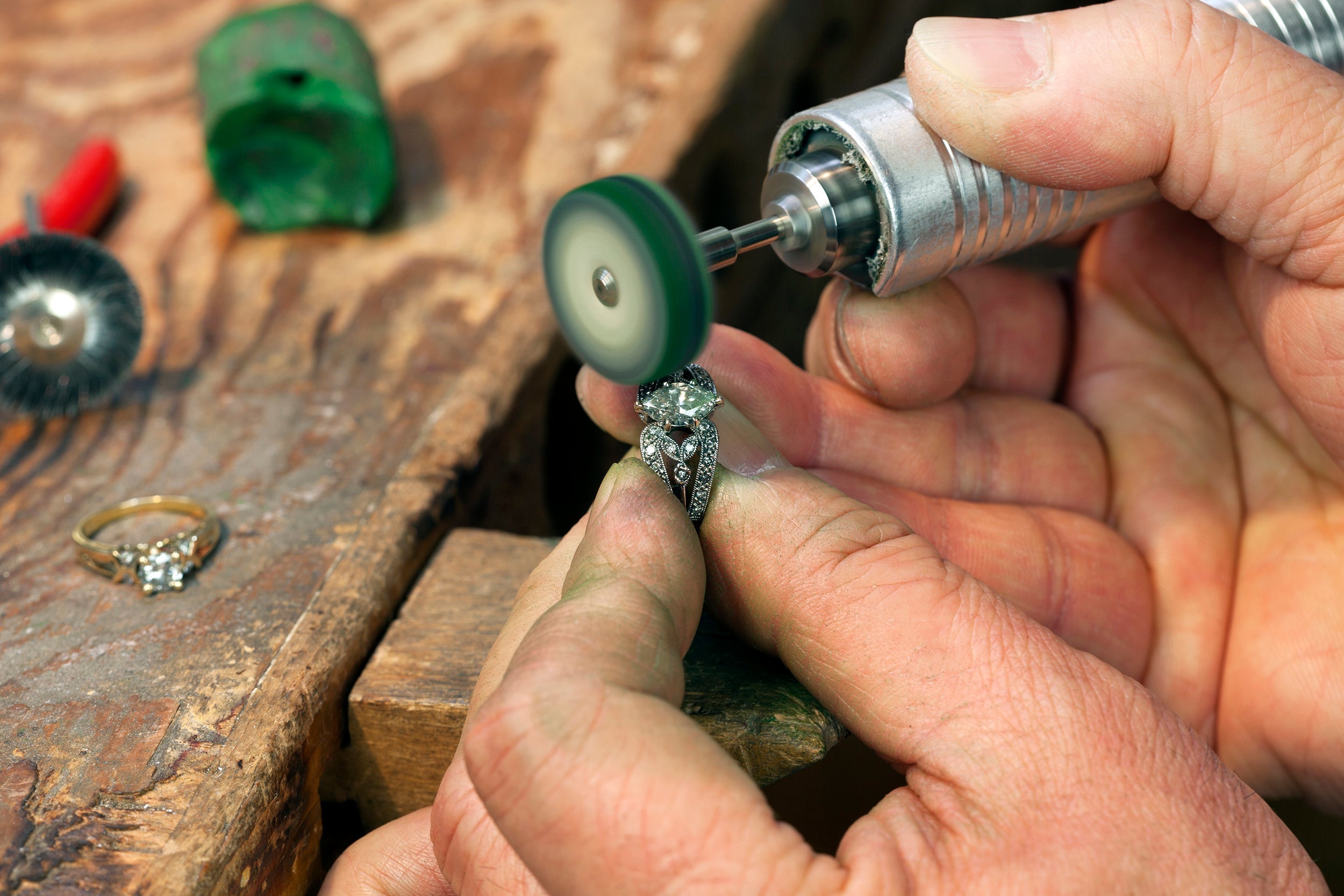
The best way to keep your jewelry looking its best is to leave cleaning to the professionals. At R.F. Moeller Jeweler, our in-store cleanings are designed to be both gentle and effective, using professional equipment and techniques that safely remove buildup without putting your gemstones or settings at risk.
During a professional cleaning, our experts also inspect your jewelry for loose stones, worn prongs, or early signs of damage—things that aren’t always visible at home but can make all the difference in preserving your piece long-term. Regular cleanings help maintain brilliance, protect the integrity of your jewelry, and prevent small issues from turning into costly repairs.
Whether it’s an engagement ring you wear every day or a cherished heirloom, professional cleanings are one of the simplest ways to care for your jewelry and keep it shining for years to come.
Stop by any R.F. Moeller Jeweler location for a complimentary professional cleaning and inspection—we’re always happy to help. 💎